Find files, editable templates and browser test targets by what you need to make or test. The directory below is cut by format; the two collections under it cut the same library by subject and by workflow.
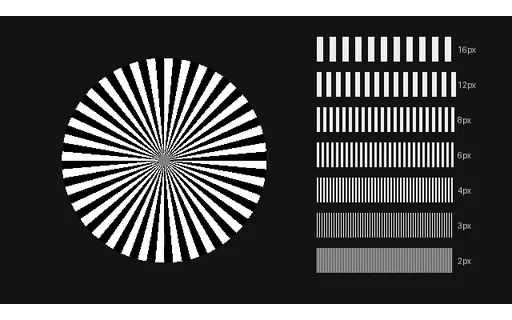
The high-quality reference for the detail-chart compression ladder, at CRF 14. Each clip in this group is the SAME source frames encoded at a progressively higher quantiser, so the only variable is the encoder setting. Useful both for artefact-removal models and for calibrating a quality metric against settings whose visual cost is already known.
The high-quality reference for the gradient-sky compression ladder, at CRF 14. Each clip in this group is the SAME source frames encoded at a progressively higher quantiser, so the only variable is the encoder setting. Useful both for artefact-removal models and for calibrating a quality metric against settings whose visual cost is already known.
The high-quality reference for the text-motion compression ladder, at CRF 14. Each clip in this group is the SAME source frames encoded at a progressively higher quantiser, so the only variable is the encoder setting. Useful both for artefact-removal models and for calibrating a quality metric against settings whose visual cost is already known.
One H.264 elementary stream wrapped in 3GP. Every file in this group was produced from the SAME encode with a stream copy, so the compressed video bytes are identical and the container is genuinely the only difference. The mobile profile of MP4, from the feature-phone era. Still emitted by some Android capture paths, so it turns up in user uploads.
One H.264 elementary stream wrapped in AVI. Every file in this group was produced from the SAME encode with a stream copy, so the compressed video bytes are identical and the container is genuinely the only difference. Microsoft's 1992 container. No B-frame timestamp support and a 4 GB practical limit, but enormous amounts of archived material still live in it.
One H.264 elementary stream wrapped in M4V. Every file in this group was produced from the SAME encode with a stream copy, so the compressed video bytes are identical and the container is genuinely the only difference. MP4 under Apple's alternative extension. Byte-identical structure; the extension exists purely so iTunes could distinguish video, and it is a good test of extension-driven format detection.
One H.264 elementary stream wrapped in Matroska. Every file in this group was produced from the SAME encode with a stream copy, so the compressed video bytes are identical and the container is genuinely the only difference. The most permissive container in common use: any codec, unlimited tracks, chapters, attachments. Not natively playable in Safari, which is its main practical limitation.
One H.264 elementary stream wrapped in MP4 (ISO BMFF). Every file in this group was produced from the SAME encode with a stream copy, so the compressed video bytes are identical and the container is genuinely the only difference. The ISO base media format, and the default for web delivery. Supports faststart, which moves the index to the front so playback can begin before the file has finished downloading.
One H.264 elementary stream wrapped in MPEG Transport Stream. Every file in this group was produced from the SAME encode with a stream copy, so the compressed video bytes are identical and the container is genuinely the only difference. The broadcast and HLS-segment container. Fixed 188-byte packets and no global index, so it can be cut at any packet boundary and still decode, which is exactly why streaming uses it.
One H.264 elementary stream wrapped in QuickTime. Every file in this group was produced from the SAME encode with a stream copy, so the compressed video bytes are identical and the container is genuinely the only difference. Apple's container, and the direct ancestor of MP4: the two share the same atom structure, which is why remuxing between them is nearly free.
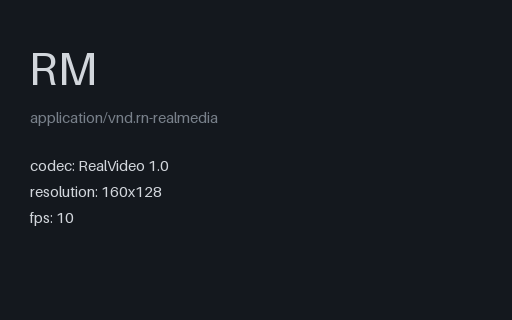
RealMedia container with a short deterministic RealVideo motion pattern for download-only legacy demux and transcode coverage. Stable P8 artifact p8-convert-legacy-rm.
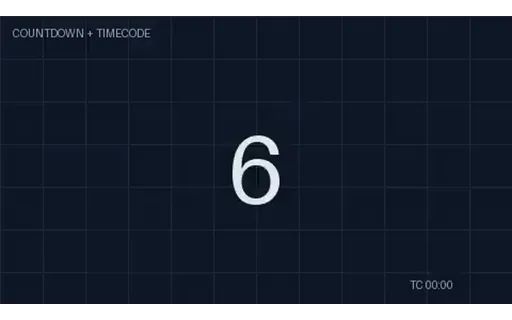
A six-second countdown (5→0) with a sweeping second-arc, a burned-in SS:FF timecode, and a beep on each second: a slate/leader fixture for testing timecode reading, frame-accurate seeking, and sync.
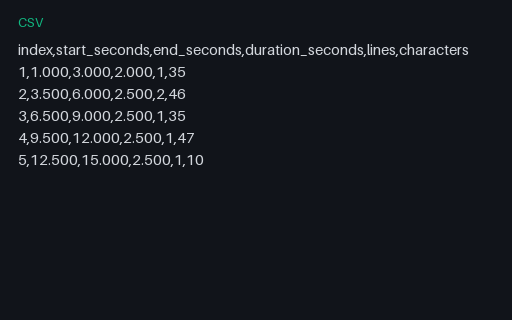
Per-cue timings and text metrics for the shared cue list, as a caption QC tool would export them: start, end, duration, line count and character count. Useful as the expected output when testing a caption analyser, and as a quick way to check reading-rate calculations against known values.
A 2.0 second 640x480 H.264 clip at 24 fps, 49 frames. Animated from the still nss-p-stick-cafe_00001_.png, so the first frame is a known image and frame extraction can be checked against it. Measured mean inter-frame change 0.0517 (active). Substantial frame-to-frame change, the end of the range where naive scene detection starts firing. Synthetic footage: two seconds at this size is a decoder and pipeline fixture rather than showcase material, hands degrade in later frames, and no text in shot is legible.
A 2.0 second 640x480 H.264 clip at 24 fps, 49 frames. Animated from the still nss-l-forest-path_00001_.png, so the first frame is a known image and frame extraction can be checked against it. Measured mean inter-frame change 0.0131 (subtle). Motion is deliberate but slight, closer to a living photograph than to action. Synthetic footage: two seconds at this size is a decoder and pipeline fixture rather than showcase material, hands degrade in later frames, and no text in shot is legible.
A DASH initialisation segment carrying codec configuration for one representation. Named by the manifest's $RepresentationID$ template, so this file also exercises whether a client resolves template variables correctly rather than pattern-matching filenames.
A DASH initialisation segment carrying codec configuration for one representation. Named by the manifest's $RepresentationID$ template, so this file also exercises whether a client resolves template variables correctly rather than pattern-matching filenames.
A DASH initialisation segment carrying codec configuration for one representation. Named by the manifest's $RepresentationID$ template, so this file also exercises whether a client resolves template variables correctly rather than pattern-matching filenames.
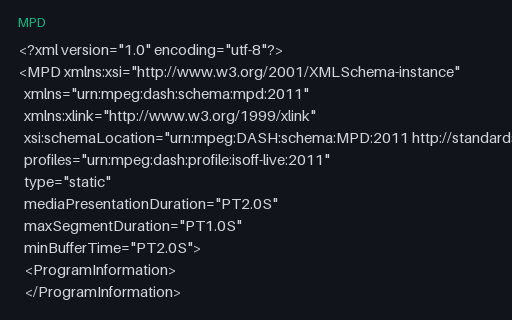
A complete, playable MPEG-DASH manifest for the same 320x180 at 300 kbps, 480x270 at 700 kbps, 640x360 at 1400 kbps ladder as the HLS package, produced from the same encoder run, so the two can be compared directly as packaging rather than as content. Every segment it references exists in this group. Served inline as application/dash+xml with permissive CORS, so dash.js can load it cross-origin.
A one-second DASH media segment, addressed by the manifest's $Number$ template. The same underlying CMAF structure as the HLS segments in the sibling package, which is the whole point of CMAF, and something a fixture set should let you verify rather than take on trust.
A one-second DASH media segment, addressed by the manifest's $Number$ template. The same underlying CMAF structure as the HLS segments in the sibling package, which is the whole point of CMAF, and something a fixture set should let you verify rather than take on trust.
A one-second DASH media segment, addressed by the manifest's $Number$ template. The same underlying CMAF structure as the HLS segments in the sibling package, which is the whole point of CMAF, and something a fixture set should let you verify rather than take on trust.
A one-second DASH media segment, addressed by the manifest's $Number$ template. The same underlying CMAF structure as the HLS segments in the sibling package, which is the whole point of CMAF, and something a fixture set should let you verify rather than take on trust.
A one-second DASH media segment, addressed by the manifest's $Number$ template. The same underlying CMAF structure as the HLS segments in the sibling package, which is the whole point of CMAF, and something a fixture set should let you verify rather than take on trust.