Find files, editable templates and browser test targets by what you need to make or test. The directory below is cut by format; the two collections under it cut the same library by subject and by workflow.
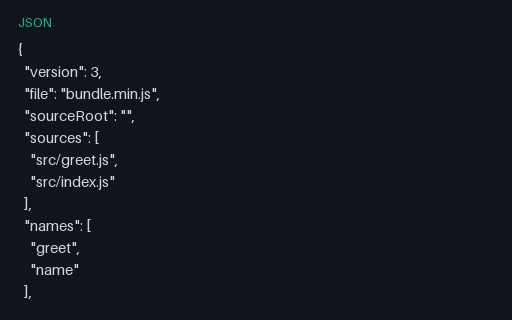
The same v3 map with the sourcesContent array removed, which is how most production builds ship: the mappings resolve but the original text has to be fetched from the paths in `sources`. For testing the fallback path of a debugger when originals are unavailable.
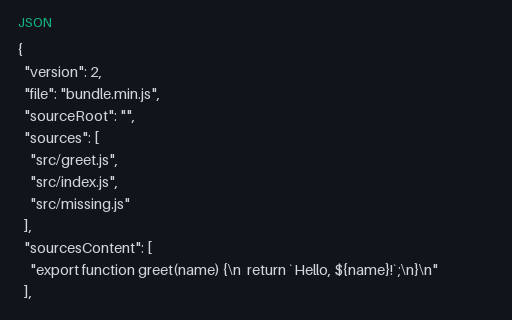
A deliberately invalid source map: version 2 instead of 3, a sources array longer than sourcesContent, a mapping segment that names an index outside `names`, and a `$` that is not in the base64 VLQ alphabet. For testing that a decoder validates the envelope before trusting the mappings.
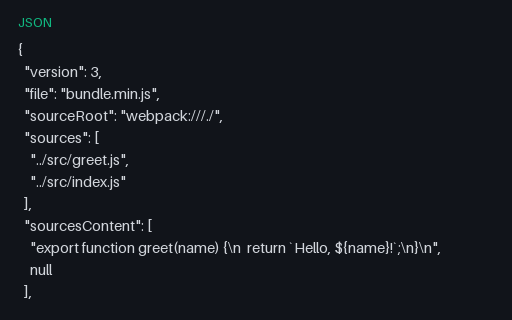
A v3 map that resolves its sources through a `sourceRoot` scheme URL, uses `../` relative paths, leaves one sourcesContent entry null, and marks the second source as third-party via x_google_ignoreList. For testing URL joining and ignore-list support in a debugger.
An SVG sprite sheet defining five reusable icons as <symbol> elements referenced by <use href='#id'>, for testing SVG sprite pipelines and icon systems. Paired with a PNG sprite twin.
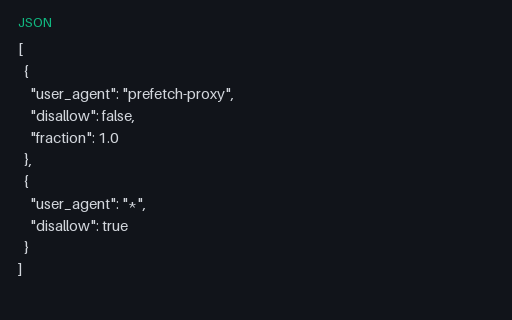
A traffic-advice document opting a fictional origin into private prefetch proxy traffic at full fraction while disallowing every other agent. For testing prefetch-proxy discovery and the JSON-array (not object) top level this format uses.
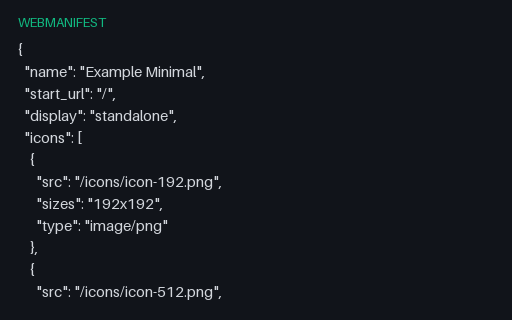
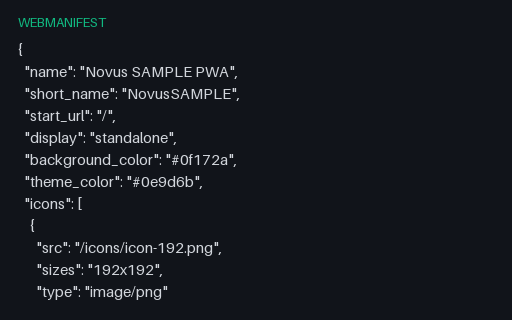
The smallest manifest that still satisfies a browser's install criteria: name, start_url, a standalone display mode and two PNG icons, with every optional member left out. For testing installability checks against the floor rather than a fully populated document.
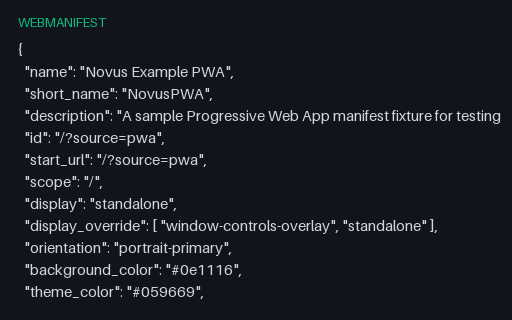
A complete Progressive Web App manifest with a full icon spread, shortcuts, categories, and theme colours, for testing PWA installers, manifest validators, and JSON parsers.
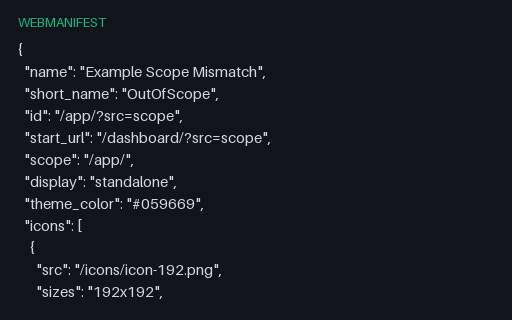
A deliberately invalid manifest: start_url sits at /dashboard/ while scope is /app/, and a shortcut points at another origin entirely. Both are the kind of mistake that makes an installed app open in a browser tab. For testing scope-containment validation.
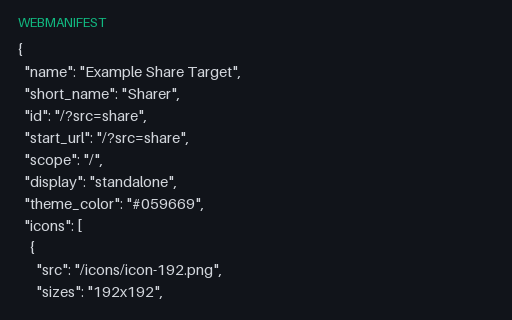
A manifest declaring a Web Share Target that accepts a POST of multipart form data, including two file parameters with MIME-type and extension accept lists. For testing share-target registration and the parameter renaming a share handler must perform.
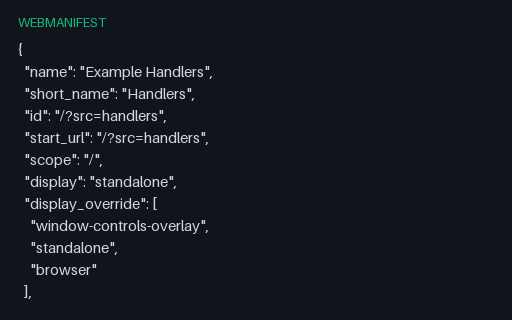
A manifest registering the desktop-integration members: two file handlers with MIME and extension accept maps, a custom web+ protocol handler alongside mailto, a launch_handler client mode list, an Edge side-panel width and handle_links. For testing OS integration and manifest members a validator may not know.
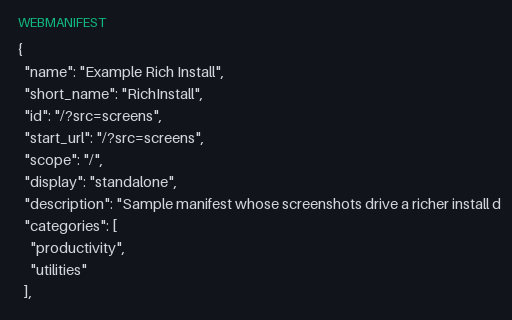
A manifest with the members that turn a bare install prompt into a rich one: four screenshots split across wide, narrow and unspecified form factors, labels, categories and two shortcuts (one with its own icon). For testing rich-install eligibility rules.
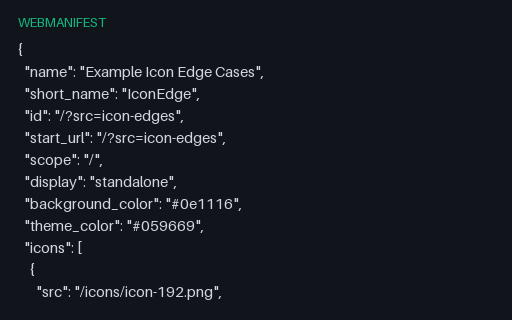
A web app manifest whose icon array is built entirely from the awkward cases: a duplicate declaration, an entry with no sizes, sizes="any" on an SVG, a multi-size ICO, a .webp declared as image/png, a cross-origin icon and a 0x0 entry. For testing icon selection and validation logic.
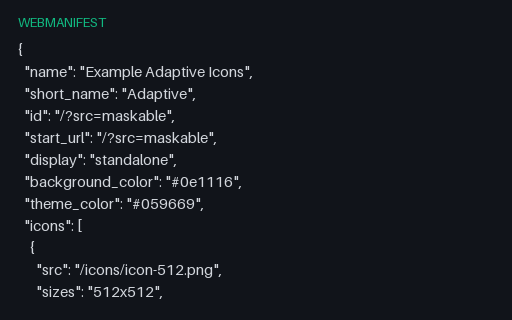
A manifest exercising every icon `purpose` keyword: any, maskable, the space-separated combination, monochrome for a notification badge, and the obsolete `badge` value. For testing purpose parsing and adaptive-icon safe-zone handling.
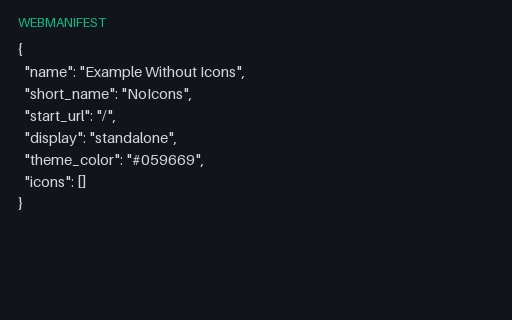
A deliberately invalid manifest: well-formed JSON with an empty icons array, so it parses cleanly and then fails installability. For testing that a PWA validator distinguishes a parse error from an unmet install requirement.