RSA 2048 Private Key (PEM)
A 2048-bit RSA private key in unencrypted PKCS#8 PEM: a deliberately PUBLISHED, sample-only key for testing PEM key parsers and PKCS#8 decoders. Never use it for anything real.
-----BEGIN PRIVATE KEY-----
MIIEvwIBADANBgkqhkiG9w0BAQEFAASCBKkwggSlAgEAAoIBAQDVYX/9q9aj3Lff
eA6qgRpQThR90RprignfD6G58QdlfCbs1czATJYL4ayoSbGA7YqVFqnzdo6SJsYf
hZXnUfix7TQ4tO33C1l7pwkKp9yW/+ClIf90PG6VZKRkWyD2inJSooR7uT8TUlsQ
8J/mhif77RDYVLZO3SkIgOeovv9leo56DsdZNjG9nJ4jD4ySsabKelY83liABb/B
k5aIFdRFdoVsTvzC3RYK7SFj5Kyyl8PDJnDG++8dAdJ1yWZ5TRw/3e3OyPNzTMZf
lm6wBG5kC0cE3KAawmuHFsQcdfRVsL5sxBMgXS0HHaJwDOAtRAUfD1oUewiNymvH
9xt+o2fVAgMBAAECggEAGRDjCtbs1+2jC/VRLmZhbkg9z/8zA1RWjzA0PLY7ut2N
al+TNePJRzazeZwZO0lW8OdAqlZQWTWE1fRzWkEe3d084oxz3S7QIYkgXsgT+bOv
8rYTtCvahwzTjZZxli9H+WfDTbrCgMU5PWbcNyWl/Mopzb/lyqM1oXIYbzzrSO2Y
VjxO+fbTfJB6xoUhmVuzKwzDZksBDKTS39GkqelVwcRN4f8zOazS48kCEWw/RMQ0
xgpQUtIdrnKjimeJK1muZcQQ68kFAYiWS6xK2q+s+JEfiI4jgoTqzXEo8oYpeIDi
Ne2nAwGm9tdu7vOy07CJ4YriChhnGk+L6mM/TUQP4QKBgQD556JjB8Z9/s7UJsPh
mKmRIOyLOCQHL3gpy8tZG7ujcZMWV8YaQqiaAMvOtNcDHIEsBld3Pxvm5SXjWoVm
Cxk/Yg2pekxbm1pO4JjP+w+ubTgcI9jdLxStSph0hRKd+7WDJI81AO02W3QXim6M
HEVxR/LlWxt5vzbQd1UybC9BOwKBgQDaldDc4fVUOFTy/GMpkFWF9uEb4CimL9CM
2YXDYRGUCeke4ybnhq0xzLottwBWpJqTfsR6HR61HM2Xaw7bLiyfQcFTJLdEwqgq
B/5g2MjeMZcLKrDk3FLxJSEUgEYens1ix/1IVOKkMBraOYEvMtgsjibjk981KBfJ
+0SR45xqLwKBgQCQ1CIzHEV3rZ12LAUnkA7tcdRElsOiems8ZcQynzTucxrYPwQr
IeiOX9m9sOZPAk0GE6LLFAL6nGCJ02MuEU6PgicCykLIcE81GUrWddzPrLJw9IFx
JiDokSurk5eHgWHfX+eywxe2gefU4MBSaOwBy73EGDnjI+MDi7UPZM06EwKBgQCJ
GA23e8Dy4aHmBIXtO6loLD9jzGOyV6rlrEhJEkiEIPMlfDKaY82cvlrG8VA1B2gr
ugZg0ILB9R69KVhX/83c1ND75LtNVQlD01+oPk89jLy/NDdeUxFyTWdCBHH2IoOO
wQAKrbK4Z7Nvy0FK6QjMaRvbAJOuM0c4V2/aUHd54QKBgQDZLFI9dxPIXhRZepCh
e9iLoI/O4GNQiBmsFzR4VZhBM5QQ6u6pjn9lGoed0eEhuoHdqtJ6hYpKsBp7C/d9
CYNxyhY4ESTmBZUkI0KuxI4JjXYpw0US9zdLtQZRTpg/r7WqI/MBSU/hePo/KpE5
j4VHNBWw1lI0W+pTtWgx2J6AAw==
-----END PRIVATE KEY-----
Specifications
- Format
- PKCS#8 (PEM)
- Algorithm
- RSA
- Bits
- 2048
- Encrypted
- false
- Sample Only
- true
- Warning
- published sample key: never use in production
Testing contract
Expected to pass- Scenario
- Exercise RSA 2048 Private Key (PEM) in its security workflow. A 2048-bit RSA private key in unencrypted PKCS#8 PEM: a deliberately PUBLISHED, sample-only key for testing PEM key parsers and PKCS#8 decoders.
- Expected result
- 28 text lines, decoded as UTF-8; first nonempty line is '-----BEGIN PRIVATE KEY-----'. Declared feature checks: algorithm=RSA; bits=2048; encrypted=False; warning=published sample key. Never use in production.
What is a .key file?
A .key file holds a private key, usually PEM-encoded in PKCS#8 (BEGIN PRIVATE KEY) or a key-type-specific format. It is the secret half of a TLS or SSH identity and must normally be protected. The examples here are published, sample-only keys that must never be used in production.
How to use this file
Use an example .key to test PEM key parsers, PKCS#8 decoders, and key-format converters (for example PEM to DER or OpenSSH). These are deliberately published sample keys, for parser testing only, never for real use.
How to use this file for testing
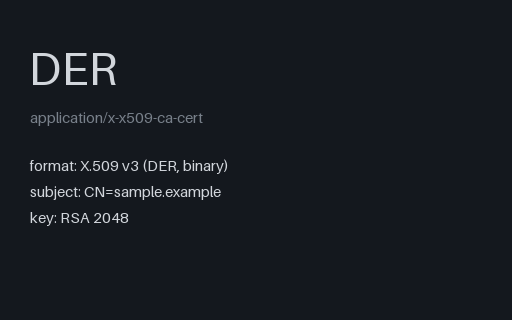
“RSA 2048 Private Key (PEM)” is a deterministic Testaroo fixture for Certificate & key testing, Editor testing. Self-signed X.509 certificates (PEM, CRT, DER), a CSR, RSA and Ed25519 keys, an SSH public key, a PKCS#12 bundle, and an htpasswd file, all published sample-only material, for testing certificate parsers, TLS tooling, keystore importers, and PEM/DER decoders.
Documented properties for this file: RSA · PKCS#8 (PEM). Compare results against paired or grouped companions on this page when present (clean↔damaged, searchable↔scanned, or format twins) so scores stay reproducible across runs.
Download the file once, keep the path stable in CI or local scripts, and treat the spec table as the contract: dimensions, seeds, field lists, and roles are intentional. Corrupt or invalid samples are labelled as such, expect parsers to fail loudly rather than silently accept them.
Data fixtures document their exact quirks (delimiters, encodings, null handling, schema, and row counts) in the spec table. Point your parser or importer at the file and assert it handles the documented edge cases; clean and deliberately-messy siblings make before/after diffs straightforward.
This is a published, sample-only certificate/key. Parse it, verify the chain or signature, and test PEM↔DER conversion, never deploy it anywhere real.
Generated by generation/pki_security.py. Free for any use, no attribution required, license.
Related files
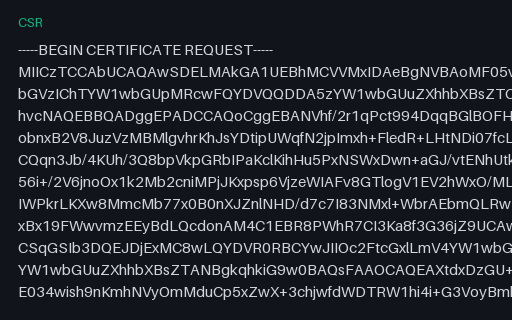
- csrCertificate Signing Request (CSR)A PKCS#10 certificate signing request (PEM) with the subject and SAN, self-signed by the RSA key to prove key possession, for testing CSR parsers and certificate-authority intake flows.
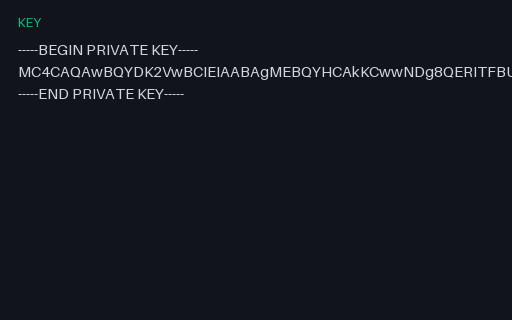
- keyEd25519 Private Key (PEM)An Ed25519 private key in PKCS#8 PEM, derived from a fixed seed: a published, sample-only modern elliptic-curve key for testing PEM parsers and Ed25519 tooling. Never use it for real.
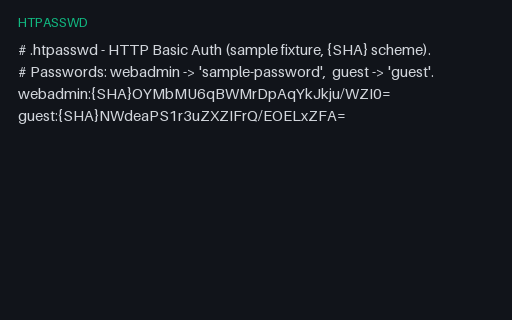
- htpasswdhtpasswd (HTTP Basic Auth)An Apache/nginx .htpasswd file with two users hashed using the {SHA} scheme (Base64 SHA-1): the sample passwords are documented in the file, for testing Basic-Auth credential parsers and hash identification.
- pubSSH Public Key (Ed25519)An OpenSSH-format Ed25519 public key (the shareable half of the key pair): a single line of algorithm, Base64 key blob, and comment, for testing SSH public-key parsers and authorized_keys tooling.
- crtX.509 Certificate (.crt)The same self-signed certificate under the conventional .crt extension (PEM-encoded), for testing trust-store importers and tools that key off the .crt extension. Sample only.
- derX.509 Certificate (DER)The binary DER encoding of the same certificate, for testing ASN.1/DER parsers, Java keystores, and DER-to-PEM converters. Published sample certificate, not a real identity.