Find files, editable templates and browser test targets by what you need to make or test. The directory below is cut by format; the two collections under it cut the same library by subject and by workflow.
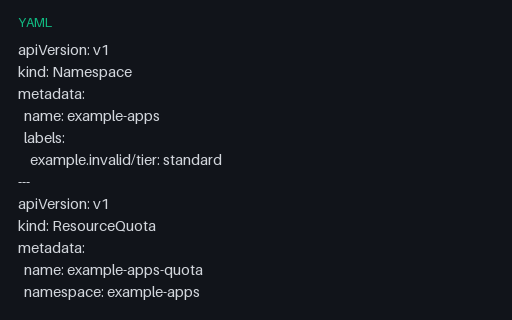
A three-document governance bundle. Its real edge case is quantity handling: values like "8", 16Gi and 250m are Kubernetes quantity strings, and a parser that coerces the quoted ones to numbers or normalises the suffixed ones changes their meaning.
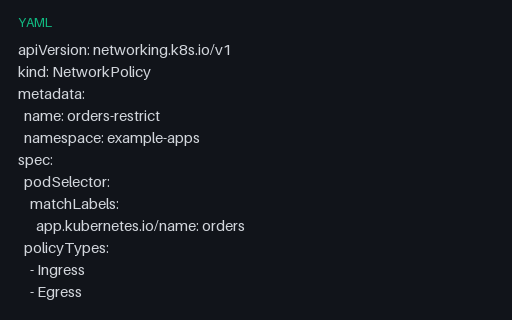
A NetworkPolicy with both policy types: an ingress rule combining namespace and pod selectors, and two egress rules, one of which uses an ipBlock with an except range. For testing policy engines that reason about allowed traffic.
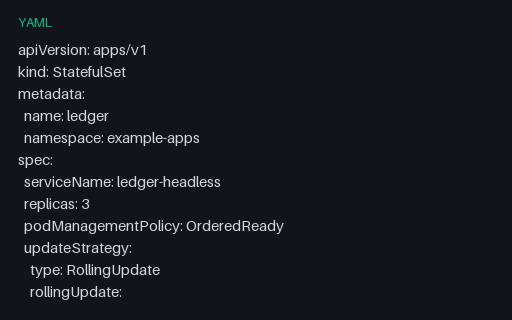
A StatefulSet with volumeClaimTemplates, an ordered pod-management policy, a partitioned rolling update, and a non-root pod security context. For testing manifest linters and admission policies that reason about storage and identity.
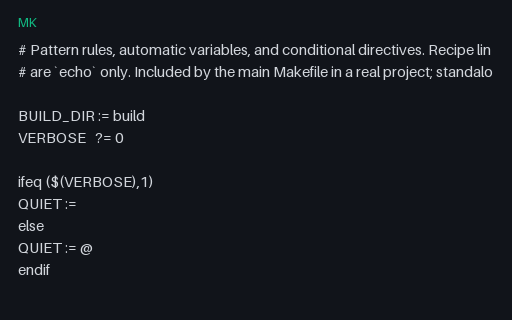
Pattern rules with the automatic variables $@, $<, $^ and $*, ifeq/ifdef conditional directives, a vpath search path, and a define block invoked through $(call). All recipe lines are TAB-indented and echo-only.
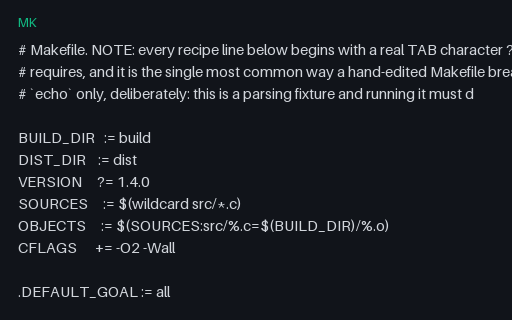
A Makefile whose recipe lines are indented with real TAB characters, as make requires. Covers simple, conditional, appended and substitution-reference variables, .PHONY, and .DEFAULT_GOAL. Every recipe is echo-only, so running it does nothing.
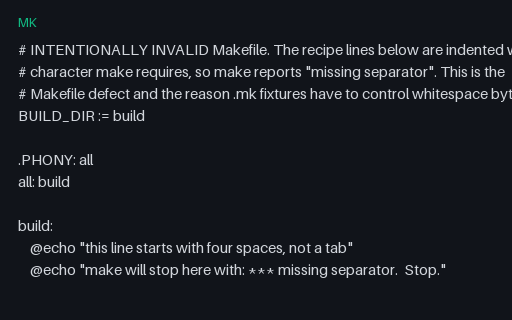
An intentionally invalid Makefile whose recipe lines are indented with four spaces instead of the required TAB. This is the most common Makefile defect there is, and it is invisible in most editors, which is exactly why it belongs in a fixture set.
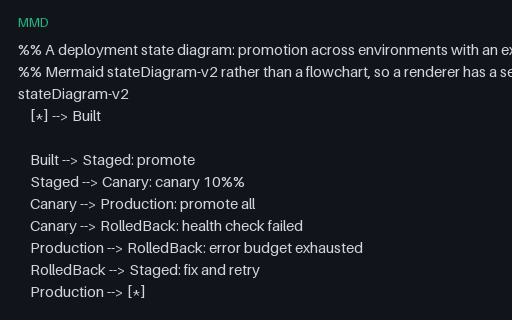
A Mermaid stateDiagram-v2 describing environment promotion with canary and rollback transitions, start and end pseudostates, and a note block. A second Mermaid diagram type, so a renderer is not only tested on flowcharts.
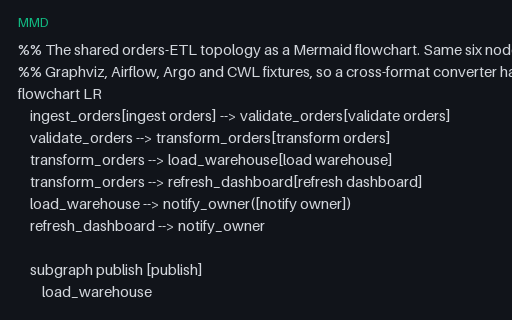
The shared six-task ETL topology as a Mermaid flowchart, with mixed node shapes, a subgraph, a classDef and %% comments. The Mermaid twin of the Graphviz fixture, for scoring diagram-format converters against one known answer.
The shared six-task topology as a plain node/edge JSON document that also publishes the expected answers (roots, leaves, longest path, and topological order), so a graph library or DAG visualiser can be scored without a hand-written oracle.
The shared topology plus one back edge, making it intentionally invalid as a DAG. The document publishes the cycle it contains, so a scheduler or graph validator can be tested on both detecting the cycle and naming it.
A Tekton Pipeline chaining three tasks with runAfter, a when expression that consumes a prior task's result, and a finally task that runs regardless of outcome. The finally block is a common omission in Tekton graph extractors.
A Tekton PipelineRun as a run request: a pipelineRef, params, timeouts and a workspace binding, with no status block. A completed run's status is a record of what happened and belongs with test-report fixtures, not with pipeline definitions.
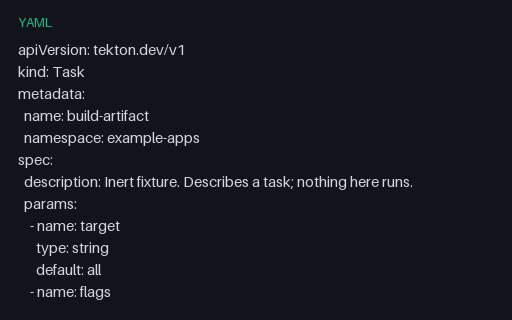
A Tekton Task declaring string and array params, a workspace, a result, and two steps that use Tekton's $(params.x) and $(workspaces.x.path) variable syntax, including the $(params.flags[*]) array expansion form.
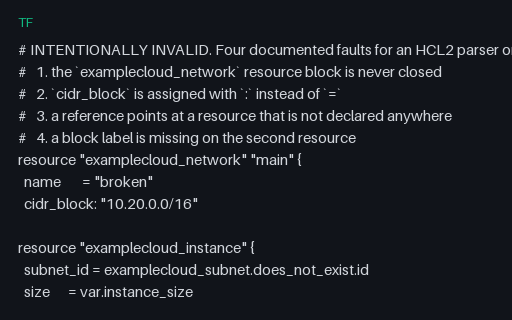
An intentionally invalid Terraform configuration: an unclosed resource block, a colon where HCL needs an equals sign, a reference to an undeclared resource, and a resource block missing its second label. Four documented faults for a parser to report.
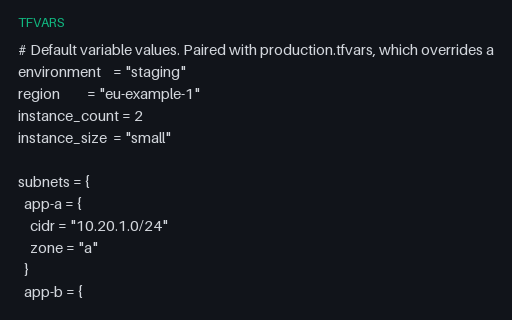
A terraform.tfvars assigning the staging defaults, including a nested map-of-objects value. Pairs with the production overrides file, which replaces that map wholesale rather than merging into it.
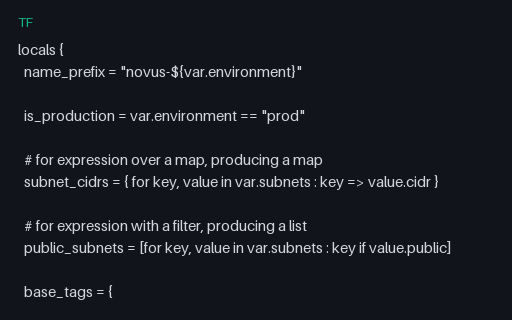
The expression-heavy half of the stack: for expressions producing both a map and a filtered list, conditional expressions selecting whole objects, and a dynamic block that generates two firewall rules from a local list.
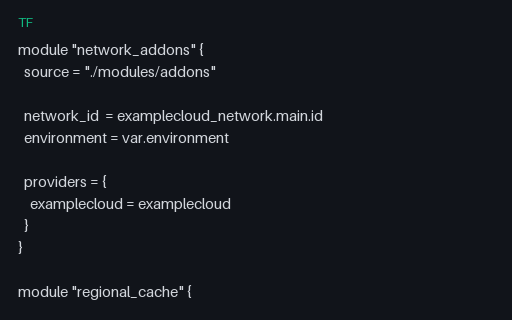
Three module calls covering the shapes a dependency grapher has to handle: a local path with explicit provider passing, a versioned registry source under for_each, and a count-gated conditional module.
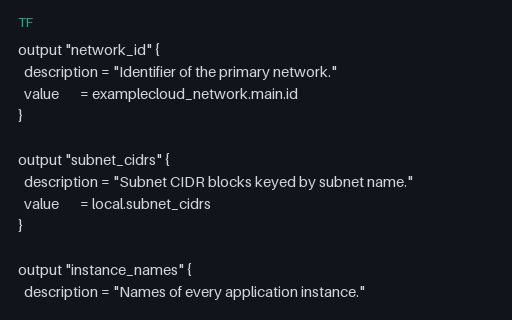
Five Terraform outputs exercising a splat expression over a counted resource, a for expression over a for_each module, and a sensitive output that must stay redacted when propagated from a sensitive input.
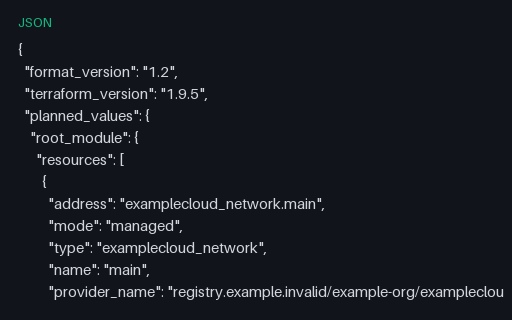
A Terraform plan JSON document with create, update and delete changes, after_unknown markers, sensitivity annotations, and a configuration section. This is the artifact policy engines read before anything runs, which is why it sits with pipeline definitions rather than with run reports.
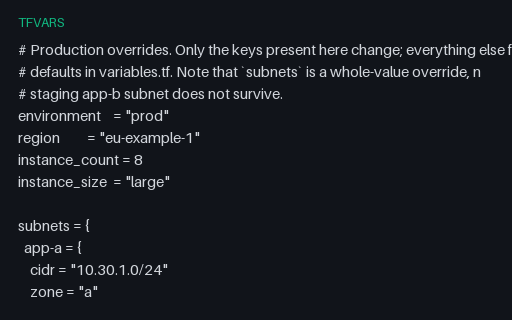
The production tfvars overrides. Its point is a semantic that surprises people: a complex-typed variable is replaced whole, not deep-merged, so the staging app-b subnet does not survive the override.
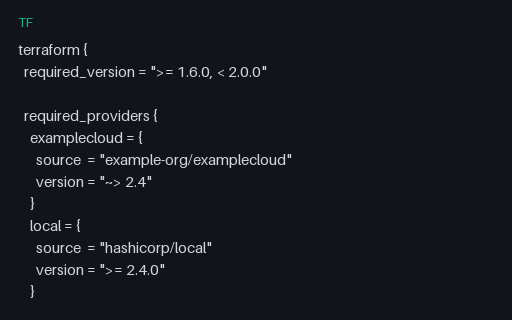
The terraform settings block: a version constraint range, two pinned providers, a local backend, default tags, and a second aliased provider configuration. The fictional examplecloud provider means nothing resolves to a real service.
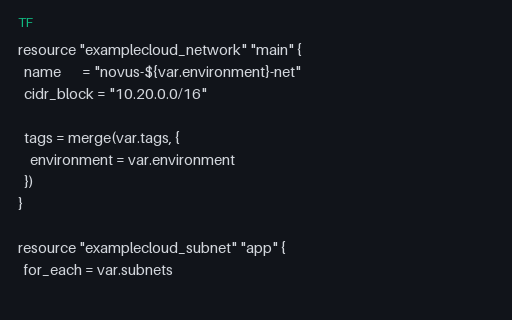
The resource graph: a network, a for_each subnet set, a counted instance resource, a data source, and a bucket on an aliased provider. Both repetition meta-arguments appear, plus lifecycle and an explicit depends_on edge.
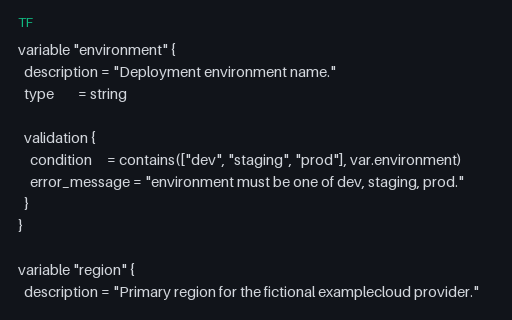
Seven Terraform variables covering string, number, map and a map(object) with an optional attribute and a default, plus two validation blocks with error messages. The sensitive variable's default is explicitly a SAMPLE note, not a credential.
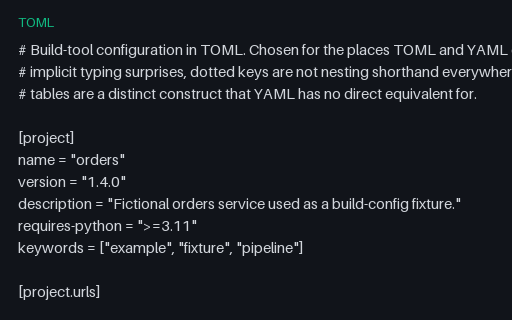
A build-tool configuration in TOML, chosen for the constructs YAML has no direct equivalent for: three [[build.step]] array-of-tables entries carrying an ordered pipeline, a quoted glob key, and all three TOML date-time flavours.